Let me take you on an inspiring journey through the
history and culture of my favorite country: Italy
"Italy is one of the world's most popular travel destinations. And for good reason! Yet, most people only visit places like Venice, Cinque Terre, and Rome. Now don't get me wrong, these places are truly wonderful. But there is so much more Italy has to offer.
By sharing my travel stories, I hope to introduce people to the many different facets of this beautiful country. Let me take you on an inspiring digital journey through the history and culture of Italy."
Featured stories
“How beautiful is sunset, when the glow of Heaven descends upon a land like thee,
Thou Paradise of exiles, Italy!”
— Percy Bysshe Shelley
My latest travel stories
Pope Francis passed away on 21 April 2025 at the age of 88. After his funeral in Piazza San Pietro, Francis was buried in the Santa Maria Maggiore. Following a period of mourning, the Conclave convened. After just four ballots, white smoke rose from the chimney of the Sistine Chapel: Habemus Papam! The cardinals elected Robert Prevost as Francis’ successor. He took the name Pope Leo XIV.
Messina, Sicily's third-largest city, was once a mere transit point for me. But after exploring, I realized I had missed quite a few interesting sights on my previous trips to Sicily. While earthquakes in 1783 and 1908, as well as WWII bombings, destroyed much of its historic center, the city still holds historical landmarks amidst modern architecture. Messina's unique blend of old and new makes it worth a visit.
In Messina, the Orologio Astronomico is a must-see! It’s one of the world’s largest astronomical clocks. Every day at noon, it performs a show with gilded figures reenacting historical and religious scenes. You’ll see a roaring lion and biblical scenes like the resurrection of Jesus. The other facade features a perpetual calendar as well as a planetarium, showing the solar system.
In 1575, the plague devastated Venice, claiming over 50,000 lives. In hope of divine intervention, the Senate commissioned a church for Christ the Redeemer. The epidemic ended in 1577, the same year the first stone was laid. This is still celebrated annually on Festa del Redentore. The church's Renaissance design features religious art, and its secret garden recently opened to the public.
The Bocche di Leone were stone carvings in Venice used as tip-off boxes for reporting crimes. Created after a failed rebellion in 1310, these boxes were placed around the city. While accusations had to be signed and supported by witnesses, anonymous reports against conspiracies were allowed. The system helped maintain Venice's legal order. Few Bocche di Leone remain today.
In 1493, Venice's Senate ordered a new clock to be placed at the heart of the city's religious, political, and commercial centers. Designed by master clockmaker Zuan Carlo Rainieri, the clock was installed in 1499 on the Torre dell'Orologio. It became the city's official timekeeper in 1858. Today, visitors can explore the tower and admire its mechanisms and historic features.
The Rialto Bridge replaced several earlier crossings over the Grand Canal. The first dry crossing, a pontoon bridge, appeared in 1181. By 1252, a wooden bridge stood in its place but required frequent repairs. After multiple collapses, plans for a stone bridge emerged. Finally completed in 1591, the bridge's design resembles earlier versions, with a single span and shops lining the central ramp.
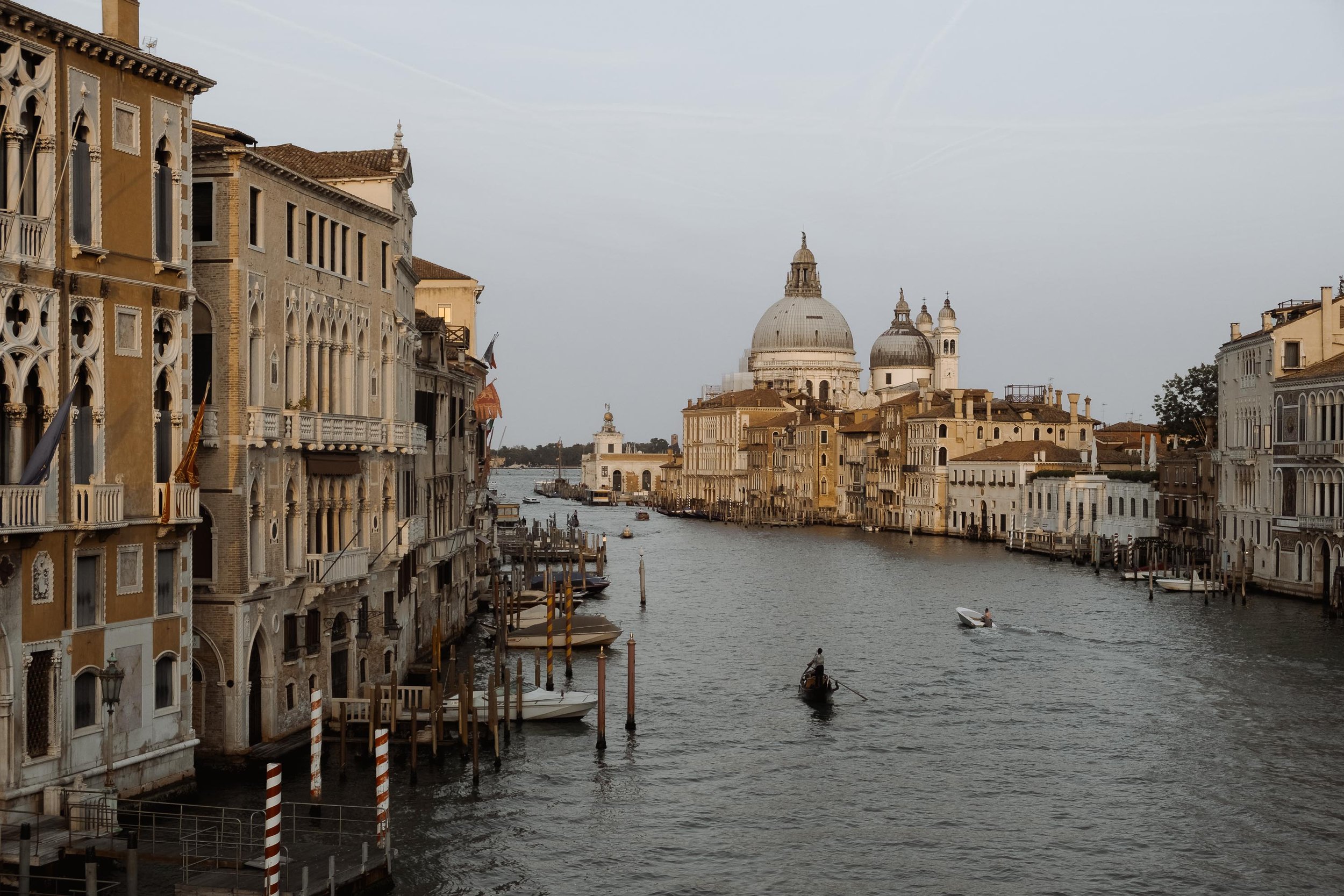
Venice's Grand Canal, or Canal Grande, is a lifeline of the city, connecting districts and landmarks. It stretches almost 4 km and showcases Venice's rich history and architectural grandeur, from Venetian-Byzantine to Baroque styles. Explore the canal by vaporetto or gondola, and don't miss landmarks like the Rialto Bridge. For a more budget-friendly option, hop on a traghetto.
The Venetian Lion, a symbol of Venice, appears throughout the city. The lion represents St. Mark, Venice's patron saint. This connection comes from Christian iconography, where Mark is linked to a lion. In 828, the Venetians brought the saint's relics to Venice, adopting him as their patron. The most famous lion statue stands at Piazzetta San Marco. It likely hails from China or the Greek world.
Find out more about medieval Venetian politics, where power was spread across various institutions. The Doge, a symbolic figurehead, had limited authority, while real power rested with councils like the Senate, the Great Council, and the Council of Ten. These bodies collectively made key decisions, shaping Venetian politics through a balance of power rather than individual rule.
Venice, the city of canals and gondolas, emerged in the 5th and 6th centuries after the fall of Rome. It grew into a powerful maritime republic by the 9th century, dominating Mediterranean trade. Venice’s cultural legacy includes renowned artists like Titian and Vivaldi. Despite military challenges, it flourished for over a millennium before its decline in the 18th century.
Planning to visit Italy? These travel tips will
make your trip even better!
Follow me on YouTube
-
Parco degli Acquedotti — Walking Tour
-
Verona — Walking Tour
-
Gubbio — Walking Tour
-
Catania — Walking Tour
-
Palermo — Walking Tour
-
Naples to Palermo — Travel by Ferry
On 2–3 June 1946, Italians voted in a historic referendum: monarchy or republic? With 54.3%, the republic won. Every June 2nd, this moment is celebrated during the Festa della Repubblica, with parades and the Frecce Tricolori soaring through the sky. State museums and archaeological sites across Italy offer free entry.